
An exit method is a cue for non-physical movement
To weigh these movements side by side, compare the main exit methods before choosing one to practise consistently.
Exit methods are used when the body is close to sleep and ordinary physical awareness has weakened. They give attention one clear movement to follow without contracting the muscles.
The method does not create the receptive state. If you begin while fully awake, even a good technique can feel like empty imagination. Timing and relaxation come first.
Roll-out and sit-up methods
For roll-out, imagine turning sideways with the whole sense of self while the physical body remains still. For sit-up, feel the head and torso rising in one smooth motion without engaging the abdomen.
These are direct and simple, which makes them useful after a spontaneous awakening. Stop immediately if the action feels muscular and return to stillness before trying again.
Rope and floating methods
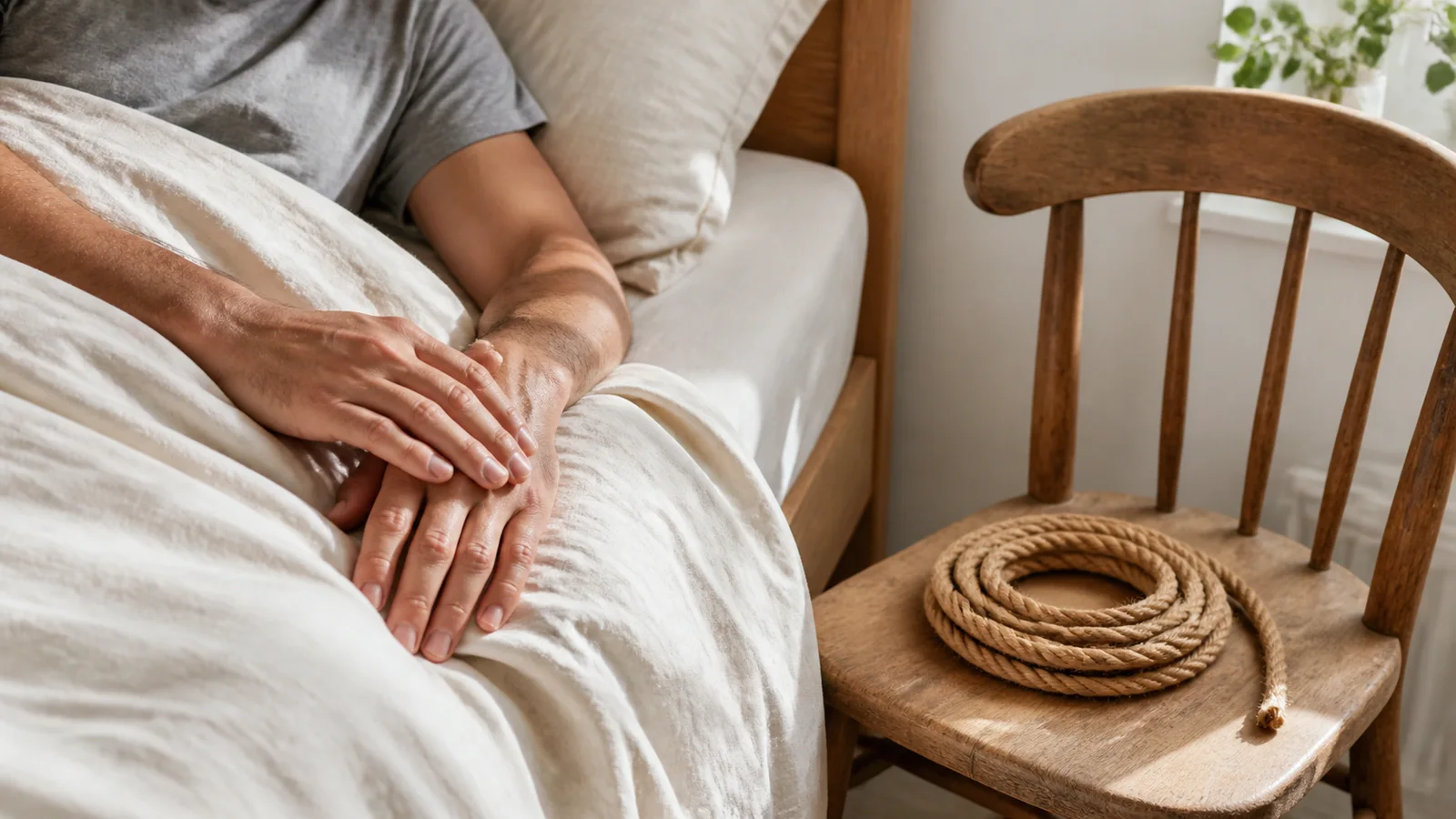
The rope technique uses tactile imagination: grip an unseen rope and climb hand over hand. Floating replaces effort with buoyancy, as if the body is lifting toward the ceiling on its own.
Rope suits people who can imagine touch and movement. Floating suits people who become too tense when performing a repetitive action. Neither requires clear visual imagery.
Rotation and swinging methods
Imagine gently rotating around the body's centre or swinging from side to side until the perceived motion feels stronger than the bed. The movement can then continue into a full turn or release.
These methods make use of vestibular sensations that already occur near sleep. Use small, smooth movement. Trying to spin violently is more likely to produce tension or nausea than a stable transition.
The target-location method
Choose a familiar point away from the bed, such as a doorway or another room. Recreate the feeling of already standing there: the floor underfoot, the angle of light and the position of nearby objects.
This method shifts attention directly rather than simulating an exit. Keep the target simple and known. An elaborate imagined scene can become an ordinary visualisation exercise or dream.
Choose according to the way you imagine movement
Use rope if touch is vivid, roll-out if whole-body movement feels natural, floating if effort wakes you, or a target if location is easier than motion. Practise the chosen cue briefly during the day.
At night, give one method a calm five to ten seconds. If nothing changes, relax rather than cycling through all seven. Repeated switching turns a delicate transition into a problem-solving session.
Evaluate the state as well as the method
After the attempt, record whether the body felt distant, what cue you used and whether the movement felt visual, imagined, physical or autonomous. This helps distinguish poor timing from a poor technique match.
Test one exit method across several well-timed attempts. The best method is the one that gives you a repeatable, calm shift, not the one with the most dramatic name.
Match the exit to the state you are already in
A strong spinning sensation naturally suits rotation or roll-out. A sense of lightness suits floating. Clear awareness of a distant point suits the target method. Using the transition that is already present requires less invention and usually less effort.
If no altered sensation is present, the exit is probably premature. Return to the breath, darkness or natural imagery rather than performing a movement harder. An exit cue is a door handle, not the process that builds the door.
The seven methods at a glance
Roll-out uses sideways movement; sit-up uses a single rising action; rope uses alternating tactile pulls; floating uses passive lift; rotation develops a turning sensation; swinging develops rhythmic vestibular movement; and the target method shifts location directly. All aim to move the perceived self while the muscles remain quiet.
Choose one primary and one backup method. Use the backup only when the current sensation clearly suits it. This gives practice enough flexibility without turning every awakening into a frantic sequence of techniques.
Choose a method from your strongest transition sensation
If you already feel lateral movement, use roll-out. If the body feels light, allow floating. If touch and grip are easy to imagine, use rope. If there is a natural rocking or spinning sensation, extend it with swinging or rotation. If bodily movement keeps restoring physical awareness, place attention at a familiar target across the room and feel located there instead.
This matching approach uses information already present in the state. It requires less effort than imposing an unrelated action. Choose one primary method before sleep and one backup that fits a different sensation. More options create more decisions, and decision-making is exactly what often returns the mind to ordinary waking awareness.
A four-session method test
Use the same sleep window for four sessions. In the first two, apply the primary method whenever body awareness fades. In the next two, use the alternative under the same condition. Record how quickly the cue became autonomous, whether physical muscles tensed, whether a scene formed and how clearly the attempt was remembered. Do not compare methods used at completely different levels of alertness.
Keep the method with the cleanest response, not necessarily the most dramatic sensations. If neither works, examine timing before adding a third. You may be attempting the exit while still fully awake or after awareness has already faded too far. The exit method occupies only a few seconds of the process; preparation, state recognition and calm response determine whether those seconds are available.
When no exit method works
Repeated failure across several techniques usually means the state is not ready, not that you need a more exotic method. Return to sleep timing, recall and the ability to notice natural awakenings before moving. Practise one cue during the day, then use it only when body awareness has changed. A method is easiest to evaluate when every other part of the attempt is stable enough that the exit itself is the only meaningful variable.
Frequently asked questions
What is the easiest astral projection exit method?
Roll-out or floating are simple starting points, but the easiest method depends on whether movement, touch or location is most natural in your imagination.
When should I try an exit method?
Use it when the body feels distant, unusually heavy or weightless, or immediately after waking before you move. Starting while fully alert often creates strain.
How long should I use each method?
A focused five to ten seconds is often enough to reveal whether the state is ready. If nothing changes, return to relaxed observation instead of forcing it.
Related guides

How to astral project: a practical, grounded guide
A no-theatre method for reaching the border of sleep, recognising the transition and making a calm exit attempt.

Why you keep falling asleep during astral projection practice
Keep losing awareness during practice? Diagnose sleep pressure, timing and attention, then use a seven-day plan to make calm, repeatable adjustments.

Astral projection for beginners: what to learn first
A complete beginner route from better sleep recall to a first calm exit attempt, with practical expectations, a seven-day routine and clear safety limits.
The rope technique for astral projection
How the rope technique works, what to imagine, when to begin and why effort in the physical muscles defeats the point.