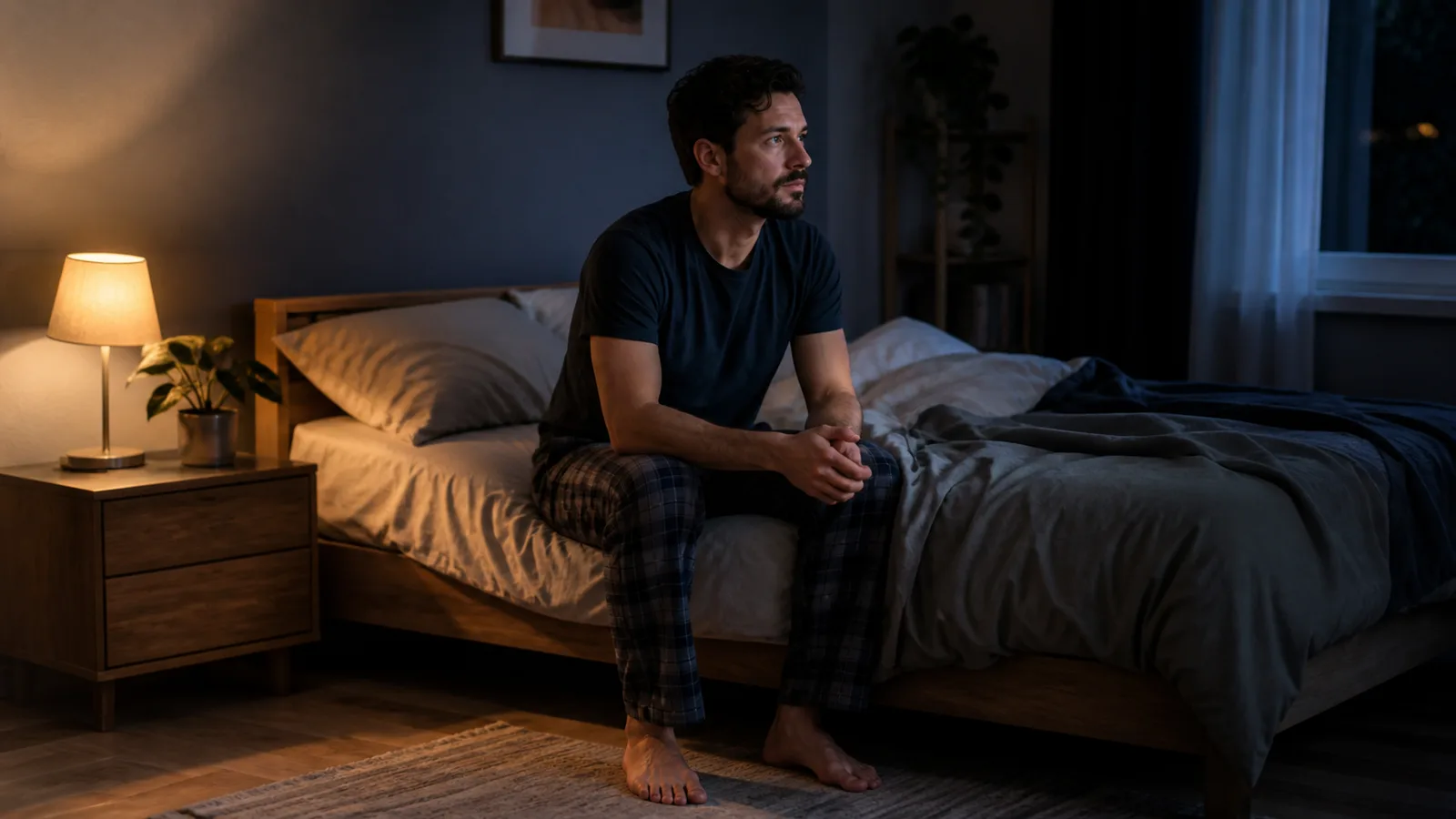
Start with the realistic risks
The most plausible risks are sleep disruption, anxiety, frightening sleep paralysis and becoming preoccupied with achieving an experience. These are worth taking seriously without inventing supernatural threats.
Fear during the transition
Vibrations, temporary immobility and sensed presences can be intense. Understanding that these experiences commonly occur near sleep can reduce panic and make it easier to stop an attempt deliberately.
When not to practise
Pause if attempts are harming sleep, increasing distress or making it harder to distinguish experiences from waking life. Anyone with a history of psychosis, mania or severe dissociation should discuss altered-state practices with a qualified clinician.
The realistic risks
For most rested adults, a calm attempt near sleep is unlikely to create physical danger. The realistic concerns are disrupted sleep, anxiety, frightening sleep paralysis, over-interpretation and a practice that becomes compulsive.
Repeated wake-back-to-bed attempts can reduce sleep quality. Fatigue then worsens concentration, mood and anxiety. A practice intended to explore consciousness should not narrow your life or make ordinary responsibilities less important.
Entities, cords and not returning
There is no established evidence that somebody can become permanently detached from the body through this practice. Stories about cords breaking or hostile beings are claims, not demonstrated safety facts. Expectation can also shape ambiguous imagery at the edge of sleep.
If fear rises, return to what you can verify: you are in a sleep-related state, breathing continues and you can end the attempt with a small movement and open eyes.
Clear boundaries for safer practice
Use occasional attempts when rested. Do not combine sleep deprivation with substances, breath restriction or extreme fasting. Avoid deliberate sleep disruption if you have insomnia or responsibilities that make fatigue unsafe.
Pause if sleep deteriorates, anxiety rises, practice feels compulsory or unusual perceptions continue into normal waking life. Persistent paralysis, severe distress or impaired functioning deserves support from a GP, sleep specialist or mental-health professional.
How fear changes the experience
One common fear is being unable to return; our guide to getting stuck separates that fear from the experience itself.
Near sleep, the mind is working with reduced and ambiguous sensory information. If you expect attack, a harmless noise or fragment of imagery can be organised into a threatening presence. The resulting fear is real even when the interpretation is uncertain, and panic can make the memory more powerful.
Prepare a neutral explanation before practising: unusual sensations are expected at the sleep boundary, you can stop, and movement will return. Avoid alarming videos or forum stories immediately before an attempt. Reducing fear is a practical safety measure, not a denial of spiritual possibility.
A personal safety check before each attempt
Ask whether you are rested, emotionally steady and free from obligations that make tiredness risky. Decide how long the session will last and what will make you stop. Keep medication and health advice unchanged. Astral projection practice is not a replacement for treatment, sleep or ordinary care.
Review the effect the next day. Curiosity, normal energy and clear perspective are reasonable signs that the practice is contained. Exhaustion, dread, compulsion or difficulty returning attention to everyday life are reasons to pause. The best method is one you can leave alone without distress.
A practical safety plan for beginners
Set limits before an attempt. Decide how often you will interrupt sleep, how long you will remain awake and what sign will make you stop. Keep the following day free of safety-critical work if you are experimenting with a broken sleep schedule. Avoid alcohol or recreational drugs as induction tools because they make sleep, recall and reactions less predictable.
Rehearse a simple exit from the exercise: focus on ordinary breathing, feel the contact with the mattress, move the tongue or fingertips and open the eyes when movement returns. Knowing that you can stop reduces anticipatory fear and gives you a concrete response during sleep paralysis.
When an altered-state practice is no longer useful
Stop if fear continues into the day, sleep quality deteriorates, or you feel compelled to interpret ordinary events as messages from an experience. Persistent hallucinations while fully awake, severe mood change or loss of normal functioning are reasons to seek qualified clinical help rather than intensify practice.
A responsible approach does not pathologise every unusual experience. It recognises that sleep and mental health are individual, and that a practice should make a person more observant and grounded rather than less able to function.
Separate frightening stories from realistic risks
Claims about severed silver cords, permanent separation, possession and being unable to return are repeated frequently but are not supported by reliable evidence. They can make normal transition sensations feel threatening before an attempt has even begun. A racing heart, sensed presence or temporary inability to move is frightening enough without importing a supernatural explanation that the person has no way to test.
The realistic risks are more ordinary and more deserving of attention. Repeated alarms can damage sleep. Intense paralysis can increase anxiety. A person can become preoccupied with interpreting every dream or sensation, and altered-state practices may be unsuitable for someone already struggling to distinguish waking events from internal experience. Treating these risks seriously is a stronger safety position than using dramatic folklore as a warning label.
Reasonable boundaries for a safe practice
Limit deliberate sleep interruption to mornings when lost sleep can be recovered. Stop an attempt when discomfort, panic or physical pain appears. Keep normal routines, relationships and responsibilities more important than achieving a state. Do not combine techniques with intoxicants, extreme fasting or intentional exhaustion. Those additions reduce the quality of observation and introduce risks that have nothing to do with projection itself.
Pause for at least a week if practice causes persistent insomnia, dread at bedtime or intrusive experiences during the day. Seek qualified professional help if unusual perceptions continue while fully awake, mood changes become severe or normal functioning declines. A grounded practice should increase calm attention and self-knowledge. If it consistently produces the opposite, stopping is an intelligent response rather than a failure of courage.
Frequently asked questions
Can you get stuck outside your body?
There is no established evidence that astral projection can permanently separate a person from the body.
Can it cause sleep paralysis?
Practising near REM sleep can make paralysis more noticeable. Stop if episodes become frequent or distressing.
Should I practise every night?
No. Attempts should never come at the expense of normal sleep.
Related guides

Can you get stuck outside your body?
Why the fear is common, what reports actually show and how to end an experience when you want to return.

Astral projection for beginners: what to learn first
A complete beginner route from better sleep recall to a first calm exit attempt, with practical expectations, a seven-day routine and clear safety limits.

How to astral project: a practical, grounded guide
A no-theatre method for reaching the border of sleep, recognising the transition and making a calm exit attempt.

The best time to practise astral projection
Why early morning usually beats bedtime, how naps can help and how to find a repeatable practice window without wrecking your sleep.