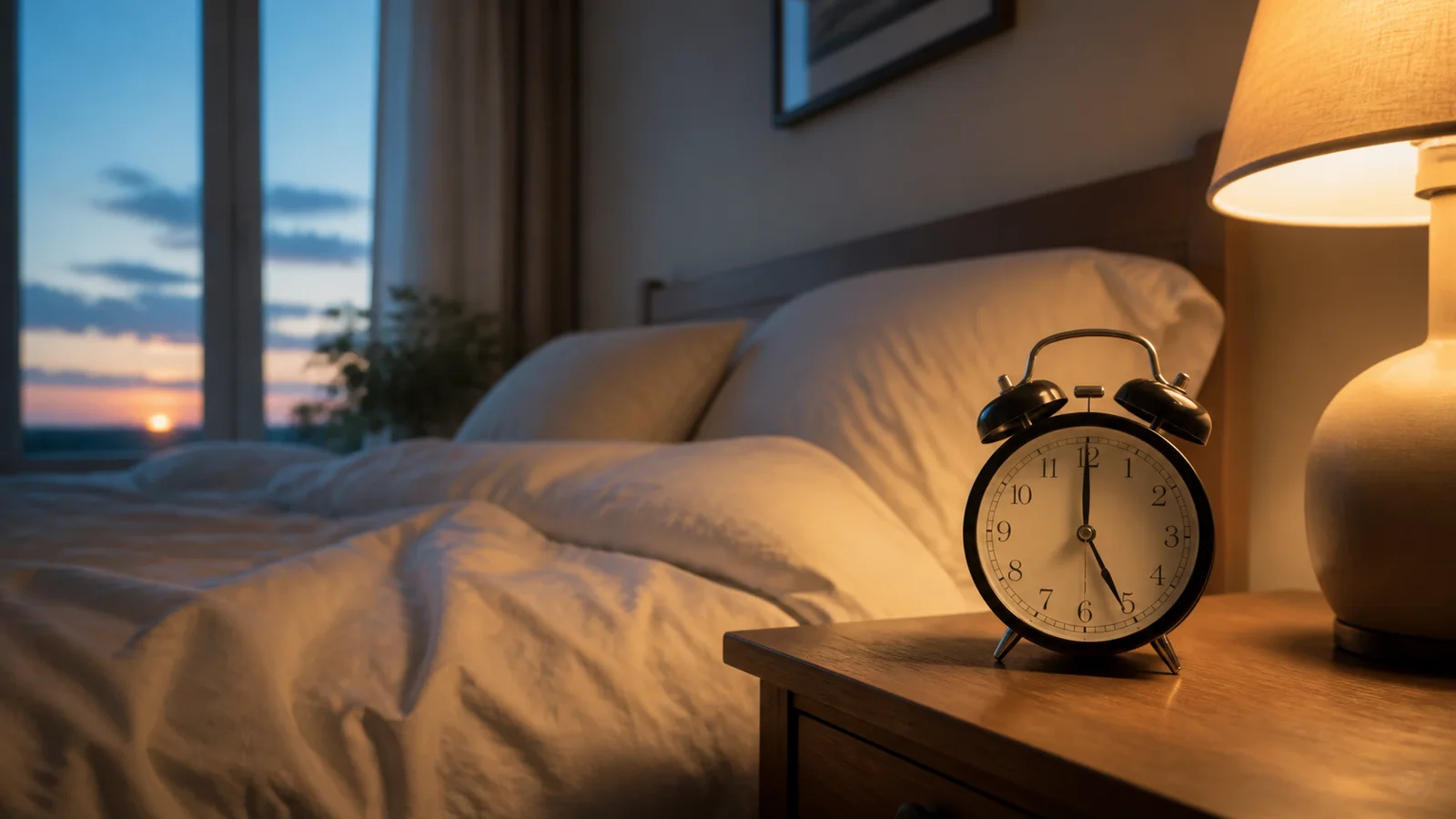
Choose a practice window
| Time | Advantage | Trade-off |
|---|---|---|
| Early morning | More REM sleep and easier recall | Requires a planned awakening |
| Daytime nap | Sleep pressure can be lighter and awareness clearer | Not everyone can nap reliably |
| Normal bedtime | Easy to fit into a routine | Deep sleep pressure makes awareness harder to maintain |
Early morning is the best starting point
For one way to use an early-morning waking, see the wake-back-to-bed practice guide and protect the sleep you still need.
For most people, the most productive window is after four to six hours of sleep. The body has already recovered some sleep pressure, REM periods are longer, and it is easier to regain awareness without becoming completely alert. This creates a useful balance between physical sleepiness and mental clarity.
Bedtime can work, especially for spontaneous projectors, but beginners often fall asleep before noticing the transition. If you have made repeated bedtime attempts with no recall, change the timing before changing the technique.
Later sleep gives you more access to REM transitions
Sleep cycles change across the night. Deep sleep is concentrated earlier, while REM periods generally become longer toward morning. Sleep paralysis, vivid dreams and spontaneous out-of-body reports often cluster around these later transitions.
That does not prove astral projection is only a REM event. It does explain why early-morning practice produces more opportunities to remain aware while the body returns to sleep.
Use a short wake period, not a midnight productivity session
Wake briefly, use the bathroom if needed, read a few notes about your method and return to bed. Five to twenty minutes is enough for many people. The aim is to raise awareness slightly while preserving the ability to fall asleep again.
If you switch on bright lights, answer messages or work for an hour, you may become too alert. If you remember nothing after returning to bed, stay awake a little longer next time. Adjust in small steps.
Naps can provide a cleaner practice window
A late-morning or early-afternoon nap can work well when the mind is awake but the body is capable of sleep. Naps also remove some of the pressure people attach to a single night-time attempt.
Avoid sacrificing essential sleep or taking naps so late that they disrupt the following night. A practice that damages your sleep will become less effective and less sustainable.
Your own pattern matters more than a universal clock time
Shift workers, parents and people with irregular schedules will not share one ideal hour. Think in relation to your sleep cycle: practise after a substantial block of sleep, when you can return to bed without an urgent deadline.
Track the time, previous sleep, how long you stayed awake and what you remembered. Ten comparable attempts will tell you more about your best window than a rigid rule copied from somebody else.
Run a simple seven-day timing test
Choose one method and keep it constant. Try three early-morning attempts, two nap attempts and two ordinary bedtime attempts. Score each for dream recall, transition sensations, awareness and sleep quality.
Keep the window that produces useful signs without leaving you exhausted. The best time is not merely the one that creates the strangest sensation. It is the one you can repeat while remaining healthy and observant.
Example schedules for different sleepers
Someone sleeping from 11 pm to 7 am might test an alarm around 4:30 am, remain awake for ten minutes and return to bed. A person who sleeps later can shift the same pattern relative to their own bedtime. The useful variable is the completed sleep block, not a mystical hour on the clock.
For a nap test, wake at the normal time, complete the morning and lie down when genuine sleepiness returns. Keep the room comfortable and allow enough time to fall asleep without creating pressure. Avoid a nap window that damages the next night's rest.
Include sleep quality in the result
A timing experiment is unsuccessful if it produces unusual sensations but leaves you unable to function. Score morning alertness and mood alongside recall and transition signs. This prevents the practice from quietly rewarding sleep deprivation.
After a week, keep the schedule that gives the clearest awareness with the least disruption. If no window works, return to normal sleep for several days before testing again. Rest is part of the method, not an obstacle to it.
Choose the timing adjustment that matches the problem
If you fall asleep before completing the method, wake later in the sleep period or remain out of bed slightly longer. If you are alert for an hour, wake earlier, shorten the wake period and remove bright light. If you remember dreams but never notice the transition, add a stronger intention and test an exit immediately after each natural awakening before moving the physical body.
People often change the induction method when the real problem is state. Rope, roll-out and visualisation all fail when the body is too awake, and every method disappears when awareness is too weak. Treat sleep timing as the main control and the technique as a smaller adjustment. This makes troubleshooting measurable and prevents a collection of methods from replacing actual practice.
A two-week experiment to find your best window
During the first week, make three attempts after roughly five hours of sleep and one during a daytime nap. Keep the wake period at ten minutes and use the same exit cue. Record sleepiness on returning to bed, dream recall, transition signs, time awake afterwards and morning energy. Do not add extra attempts to compensate for a quiet night because that changes the sleep conditions you are trying to compare.
In the second week, keep the most promising window and vary only the wake period by five minutes in either direction. At the end, choose the version that produces the clearest awareness without damaging sleep. This small experiment will not guarantee projection, but it gives you a personal evidence base. That is far more useful than copying an exact clock time from someone with a different sleep schedule.
Frequently asked questions
Can I astral project at bedtime?
Yes, but many beginners lose awareness because sleep pressure is high. Early-morning practice is often easier because the body can return to sleep while the mind is more alert.
How many hours should I sleep first?
Four to six hours is a common starting range. Protect your total sleep and adjust according to your normal schedule and how easily you return to sleep.
Are naps good for astral projection?
They can be. A nap offers lighter sleep and better awareness for some people, provided it does not interfere with healthy night-time sleep.
Related guides

Astral projection for beginners: what to learn first
A complete beginner route from better sleep recall to a first calm exit attempt, with practical expectations, a seven-day routine and clear safety limits.

How to astral project: a practical, grounded guide
A no-theatre method for reaching the border of sleep, recognising the transition and making a calm exit attempt.
Is astral projection dangerous?
A calm risk assessment covering fear, disrupted sleep, mental health and the claims that deserve more scepticism.
How long does it take to astral project?
Why there is no honest universal timeframe, what progress looks like before a full experience and how to practise without chasing a deadline.