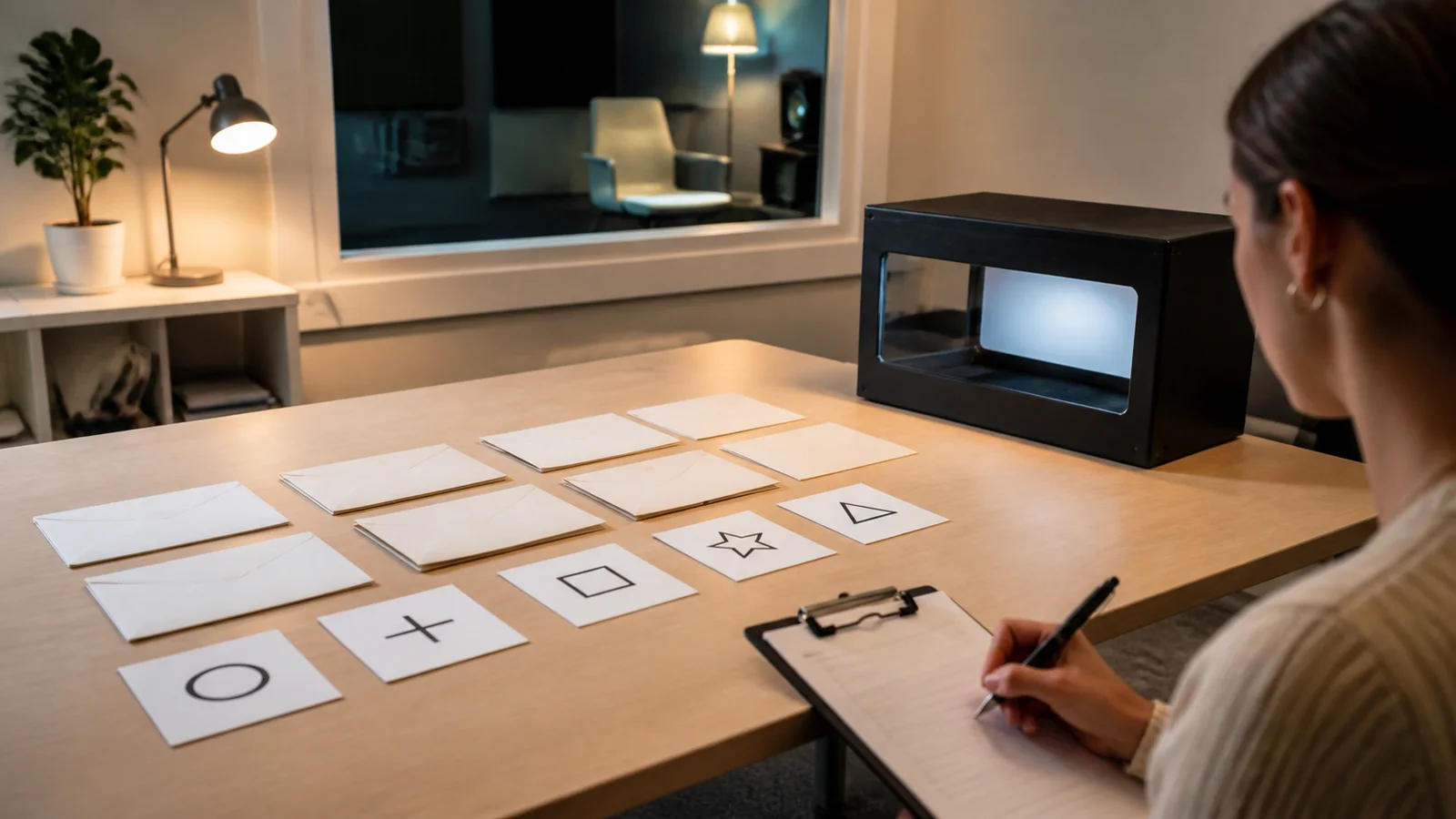
The experiment asks a narrow, useful question
To place a positive or negative target result in context, review the wider evidence question before drawing a conclusion about what left the body.
A hidden-target experiment tests whether a person can report information that was unavailable through ordinary senses while having an out-of-body experience. A target might be a randomly selected image or number placed where it cannot be seen from the bed.
A positive result would not explain consciousness by itself, but repeatable accurate perception would challenge explanations based entirely on imagination and known information. That makes the design valuable even when the larger theory remains open.
Casual household tests are easy to over-interpret
If a friend chooses a familiar object, subtle cues and prior knowledge can influence the guess. If many details are described and one happens to match, selective memory makes the success look stronger than it was.
Targets must be specific enough to score. All attempts, including failures and nights with no experience, need to be recorded. Otherwise a long sequence of misses can disappear behind one memorable resemblance.
Choose the target randomly and late
Use a large pool of clearly different images and a random selection process. The target should be chosen after the participant can no longer see the setup. Nobody who interacts with the participant should know which image was selected.
Automated selection and time-stamped records reduce opportunities for leakage. The target must remain concealed until the report has been written and locked.
Independent judging is better than a direct guess
After the attempt, give an independent judge the participant's report and several possible targets, including the real one. Ask the judge to rank them by similarity using a method decided in advance.
This approach can capture descriptive information without letting the participant reshape the account after seeing the answer. Multiple judges and a published scoring rule make the result more robust.
Decide what counts before collecting data
Write down the number of trials, target pool, scoring method, exclusions and success threshold before the first attempt. This is preregistration in simple form. It prevents convenient changes after results are known.
A single striking hit is a reason to repeat the test, not declare proof. Replication by different participants and investigators matters because unusual results can arise from chance, error or unnoticed information leakage.
A practical personal protocol
Ask a trusted person or script to select one image from at least twenty and store it face up in a closed room. Do not discuss the pool. Immediately after each attempt, write sensory details and make one final sketch before checking the target.
Run a fixed series such as twenty trials and keep every result. Have someone who did not set the target compare each report against several candidates. Personal experiments are not a substitute for a laboratory, but careful controls make them far more informative.
The main sources of error
Sensory leakage occurs when the participant receives an unintended clue. Optional stopping occurs when a series ends after a hit. Multiple comparison occurs when a broad report is matched against many possible features. File-drawer bias hides unsuccessful trials. Each can produce a persuasive result without unusual perception.
Good design addresses the errors before the experiment begins. Separate the target setter from the participant, automate selection, use a fixed number of trials, define the score and preserve every report. Controls make a positive result more meaningful rather than less exciting.
A report template that improves judging
Divide the report into shapes, colours, textures, objects, spatial layout, movement and emotional impression. Add a drawing and confidence rating before seeing any choices. Avoid naming an object unless the perception is specific; concrete sensory detail gives an independent judge more to compare.
Time-stamp and lock the report, then present the real target among several decoys selected by the same process. Publish the full set if sharing a result. Transparency is what allows an interesting personal test to become useful evidence.
An example twenty-trial protocol
Create a pool of at least forty images that differ clearly in subject, colour and composition. Before each trial, use a random process to select the target after the participant is settled and cannot see or communicate with the person handling it. Place the target in a fixed concealed location. The participant records every impression immediately after the attempt, including a drawing, sensory categories and confidence ratings.
Lock the report before revealing anything. Give an independent judge the report with the target and three randomly chosen decoys, then ask for a ranked order using written criteria. Complete all twenty scheduled trials, including nights with no experience, and publish the procedure and full results. The series is still small, but it is far more informative than repeating attempts until one description seems to match.
How to interpret hits, misses and ambiguous results
A direct, specific match is interesting only in relation to the scoring rules and number of trials. A red circle is weak evidence if many targets contain red or circular elements. A detailed combination selected before judging is stronger. Statistical performance above chance should be reported with uncertainty, and an analysis chosen after seeing the data should be identified as exploratory rather than presented as the original test.
Misses are scientifically valuable because they show the reliability of the method. If vivid experiences produce target accuracy no better than chance, that constrains claims about physical perception even if the experiences remain personally important. If performance is consistently above chance, the next step is independent replication with stronger controls. Either outcome improves understanding when the complete record is preserved.
What a credible experiment report should publish
A complete report includes the target pool, randomisation method, who knew the target, every participant report, the scoring rule, judge rankings, exclusions and all scheduled trials. It should say which analysis was planned in advance and provide enough detail for another person to repeat it. Publishing only the successful sketch and target image creates a persuasive story, but it prevents readers from judging chance, leakage and the number of unsuccessful comparisons.
Frequently asked questions
Have hidden-target experiments proved astral projection?
No body of evidence has produced decisive, widely replicated proof. The method remains useful because it creates a clear test of information obtained beyond ordinary senses.
Can I run a hidden-target test at home?
Yes, but use random targets, prevent anyone near you from knowing the answer, record every attempt and decide the scoring method in advance.
Why use several possible targets for judging?
Comparing the report with decoys reduces subjective matching. It shows whether the true target fits better than plausible alternatives.
Related guides
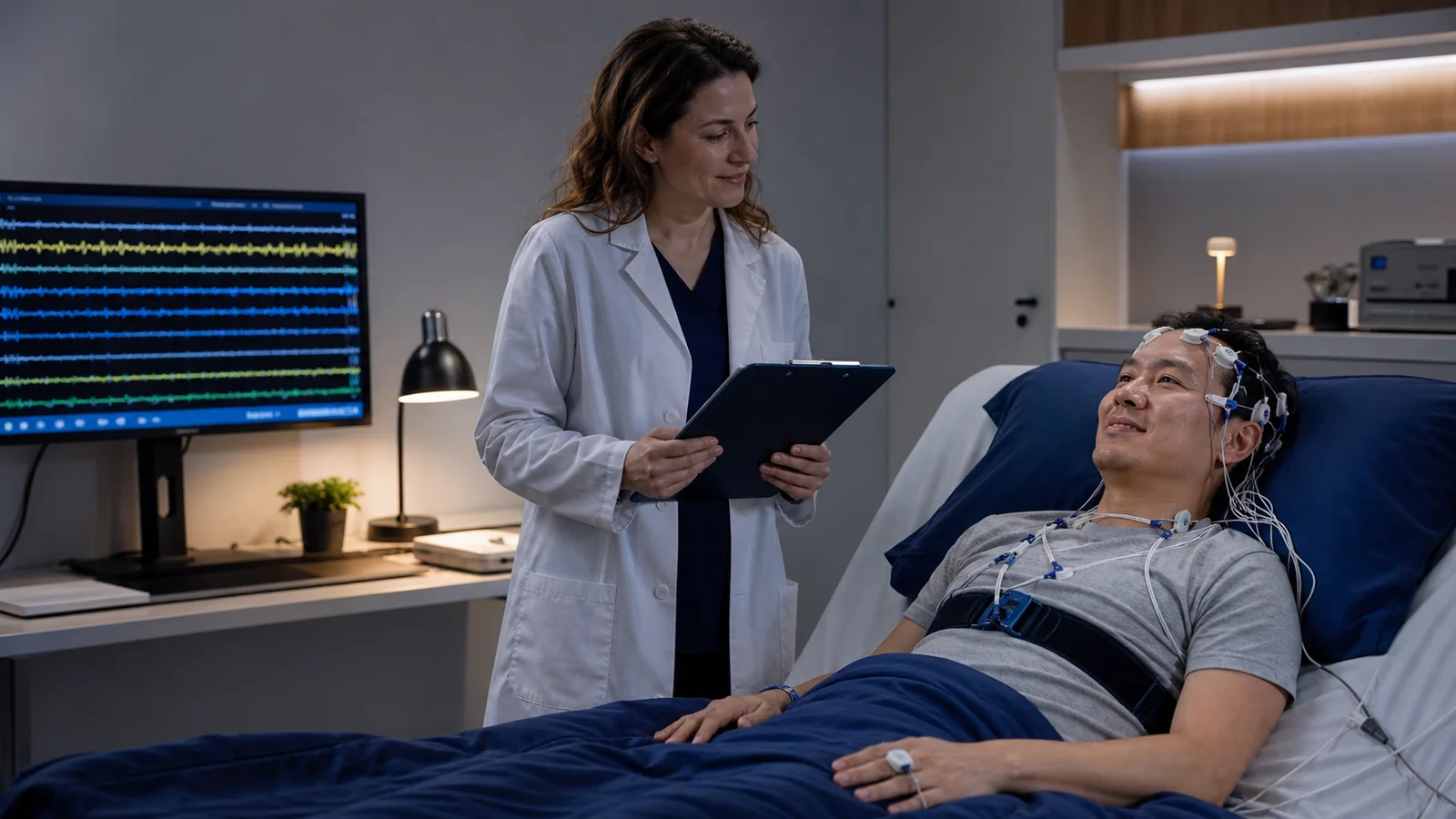
Is astral projection real?
The experience is real. The harder question is what it represents, and how we could test competing explanations fairly.
What is astral projection?
A precise definition of astral projection, how it differs from dreams and sleep paralysis, and why explanations remain contested.
Astral projection and sleep paralysis
Why the two states overlap, how to respond to frightening sensations and how to decide whether to continue or wake up.

Astral projection vs lucid dreaming
The practical differences, the genuine overlap and why vividness alone cannot tell you which state you experienced.